In Danish HERE
We are proud to share that the M4Pris – Peer Mentoring Programme for Prison Staff Erasmus+ project has received an excellent final evaluation score of 90/100, together with very positive feedback and recognition of the achievements reached throughout the full project period.
As coordinator, BrainLog had the honour of leading this ambitious European cooperation project from 1 September 2022 to 31 August 2025, bringing together 7 participating organisations from Denmark (BrainLog and Fængselsforbundet – Danish Prison Officers’Union), Portugal (Aproximar), Romania (SNPP: National Trade Union of Prison Policemen and Vis Juventum) , Greece (ALLI), and Belgium (KU Leuven) around one shared goal: to strengthen the well-being, resilience, and professional development of prison staff through a structured peer mentoring approach.
Over the last three years, M4Pris consortium successfully delivered three major results
Over the last three years, M4Pris successfully delivered three major results. First, the Blueprint of Prison Staff Mentoring established a solid evidence-based foundation for the project. It included a review of 39 academic publications, analysis of 17 relevant and promising mentoring practices, and direct field research across partner countries involving 54 prison staff members through interviews, surveys, and focus groups. This work made it possible to identify real needs, define a validated Mentor Profile, and create a transferable framework for correctional settings across Europe.
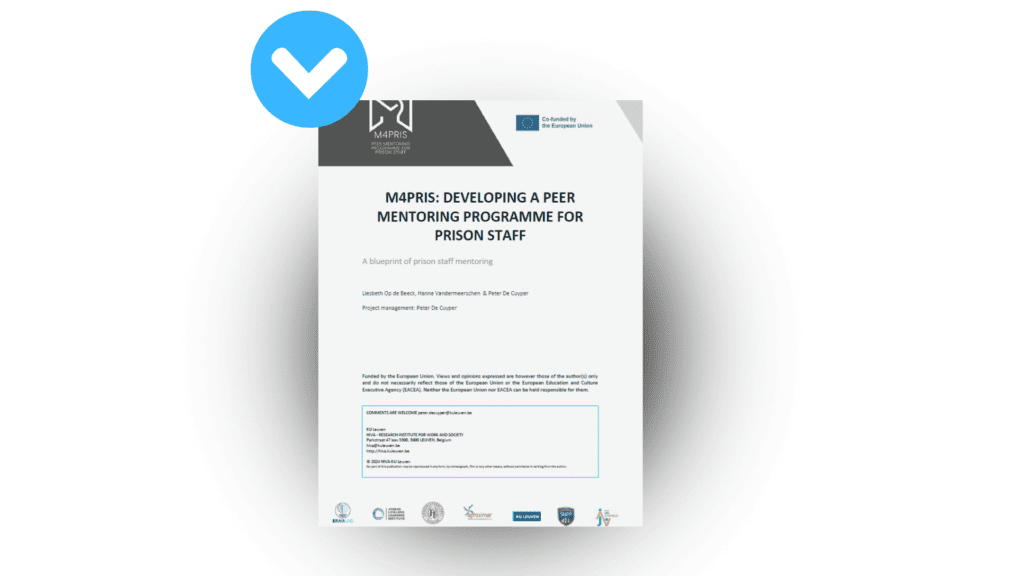
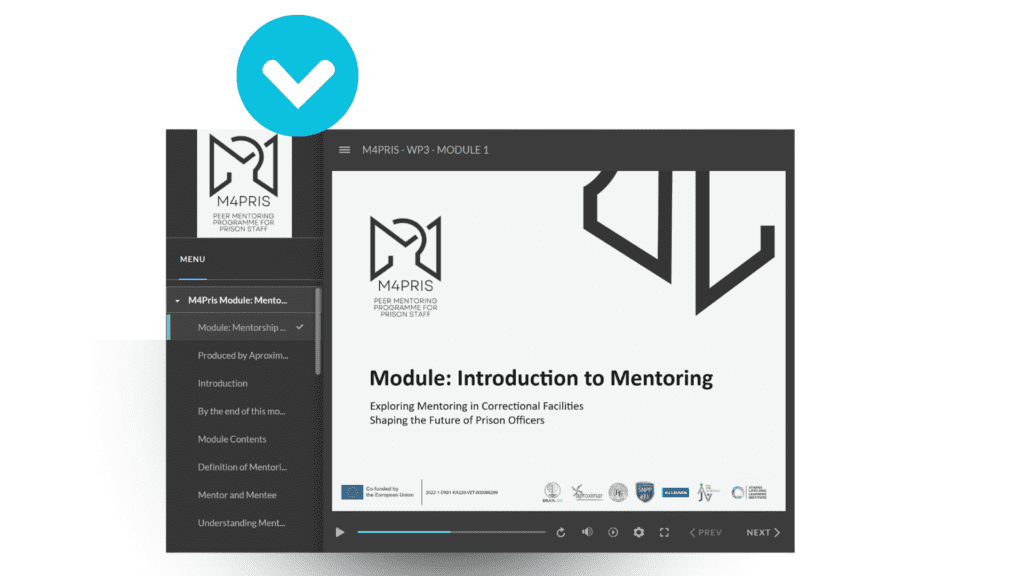
The second major result was the Peer Mentoring Programme for Prison Staff, which moved from research into practice and exceeded expectations on a remarkable scale. While the initial target was 60 mentors and 40 mentees, the pilot ultimately engaged 121 mentors and 212 mentees — 333 participants in total across Portugal, Denmark, Romania, and Greece, surpassing the original plan by more than 300%. The programme was developed as a structured and multilingual VET resource, translated into all partner languages and launched through a digital LMS platform for long-term access and reuse.
Project Result: Peer Mentoring Programme for Prison Staff
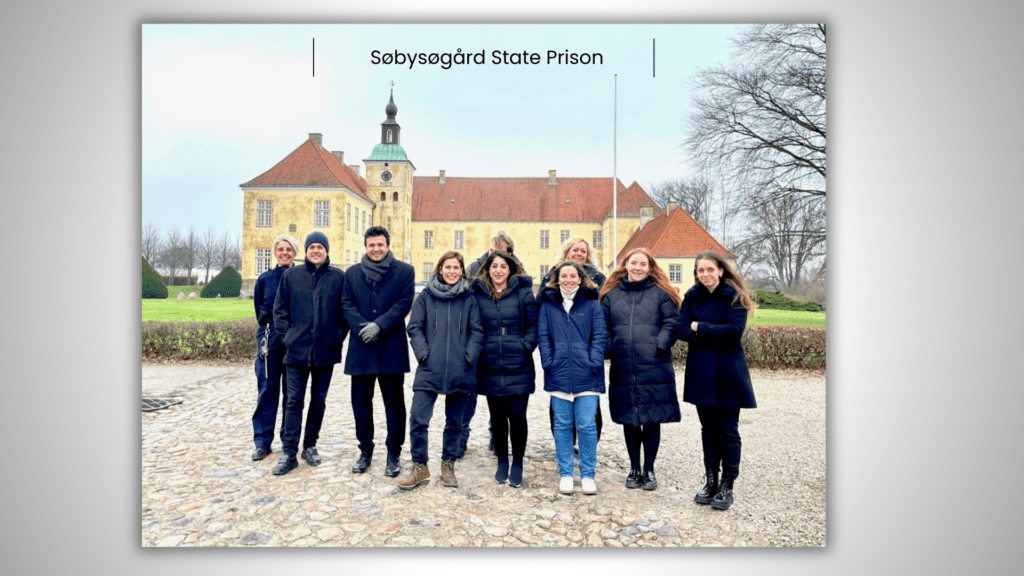
The national achievements were especially significant. In Denmark, BrainLog and Fængselsforbundet integrated M4Pris as a complementary resource into the country’s already established three-year mentoring framework. Recruitment reached 64 mentors and 52 mentees, and evaluation data from 216 participants confirmed improvements in mentoring quality, communication, onboarding, and workplace adaptation for new recruits. The Danish Prison Officers’ Union also expressed interest in continuing the use of M4Pris materials within the national programme.
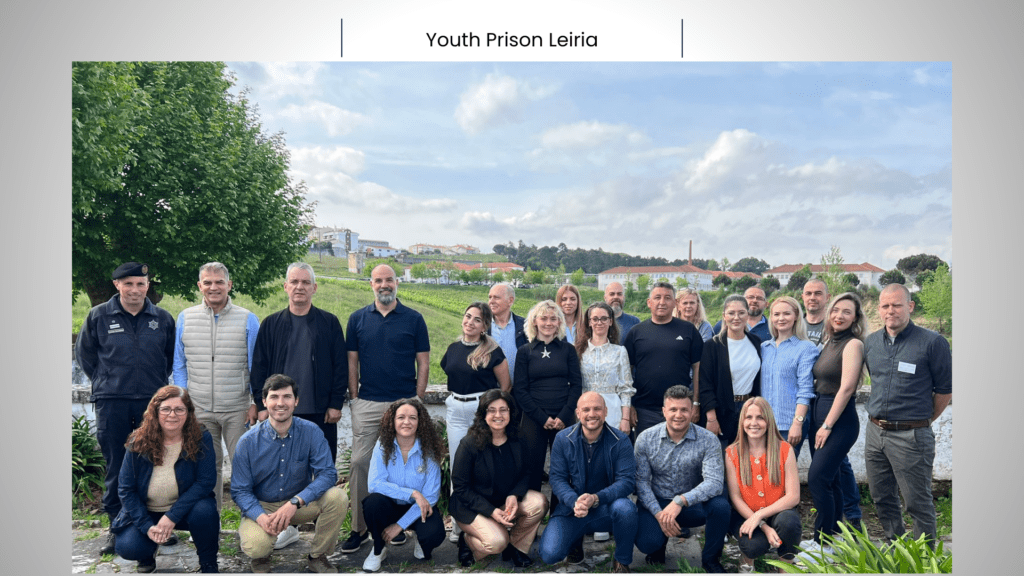
In Portugal, Aproximar, together with DGRSP and Leiria Youth Prison, trained 20 mentors and involved 22 mentees. The Portuguese pilot was particularly important because mentoring for prison staff had never before been implemented in the Portuguese prison system. Staff across all 49 prisons were informed about the project, and Leiria Youth Prison alone engaged more than 50 prison officers through multiplier activities. The results generated strong institutional interest and opened discussion on scaling the model to additional prisons.
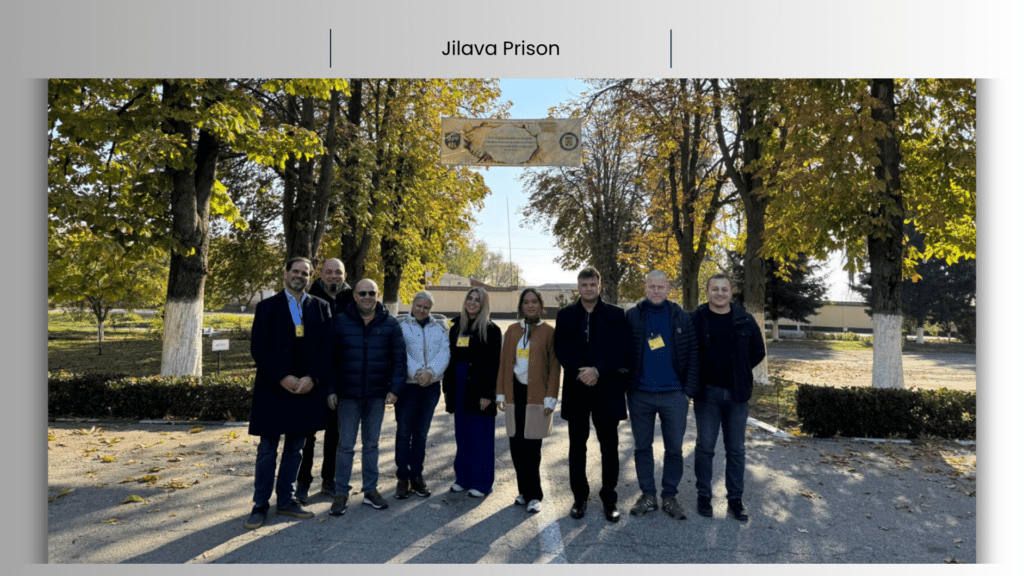
In Romania, Vis Juventum and SNPP, working in close cooperation with the National Administration of Penitentiaries, recruited 24 mentors and 24 mentees. The Romanian implementation stood out for its strong institutional support and practical adaptations, including role-play, case studies, and scenario-based learning tailored to the correctional context. The project also helped create a precedent for stronger cooperation between unions and prison administration in staff development. In addition, the mentoring programme was inserted as a topic in the annual training programme of the Romanian prison service, giving the project a concrete long-term legacy.
In Greece, ALLI, in partnership with OSYE (Federation of Correctional Officers of Greece) and the General Secretariat for Crime Policy, recruited 13 mentors and 14 mentees. The pilot involved staff from 7 correctional facilities and led to the creation of 14 mentoring pairs. Each pair held around 10 in-person meetings, and all pairs expressed a clear wish to continue meeting informally after the project ended — a powerful sign of the programme’s relevance and value. The Greek pilot also marked the first structured mentoring initiative in Greek prisons, creating strong interest among staff and policymakers.
The third major result was the Training Course for Mentoring Coordinators, designed to support the sustainable implementation of mentoring in prison institutions. The course was developed into six multimedia modules, translated into English, Danish, Greek, Portuguese, and Romanian, and delivered in a blended format through the LMS. Across countries, participant satisfaction exceeded 9/10, with evaluation data showing clear gains in coordination skills, communication, mentoring ethics, and mental health awareness.
Project Result: Training Course for Mentoring Coordinators
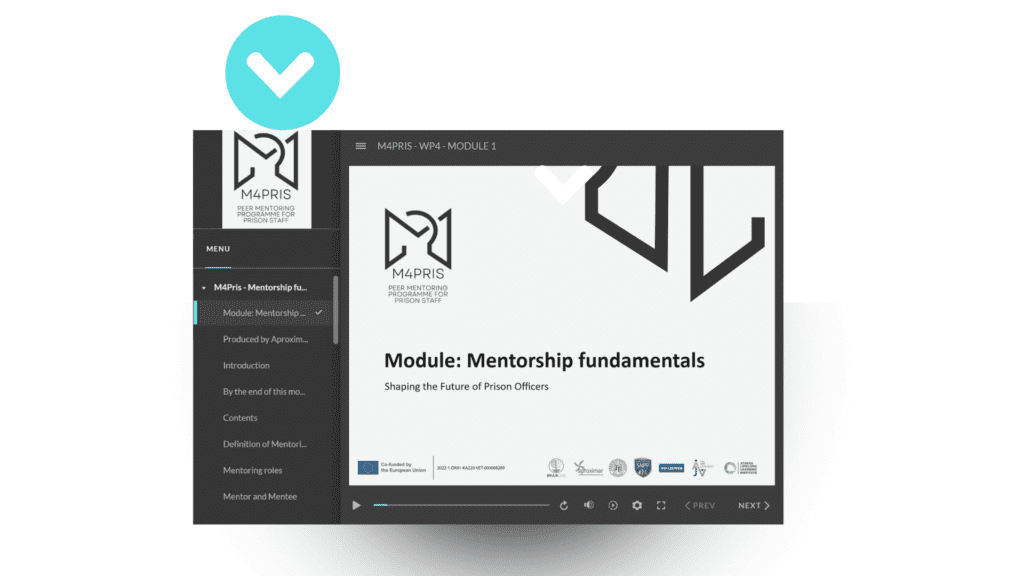
Again, the national achievements were strong. In Denmark, BrainLog and Fængselsforbundet involved 20 coordinators, using M4Pris to enrich the national mentoring framework with new content on well-being and crisis management. In Romania, the course was piloted with 12 HR coordinators from prisons, and over 80% rated it as highly effective. In Greece, 15 coordinators from 5 prisons took part, with 100% recommending the training to peers. In Portugal, Aproximar hosted the important 3-day LTTA in Leiria Youth Prison from 6 to 8 May 2025, gathering participants from partner countries and justice institutions in a unique setting for peer learning, validation, and exchange.
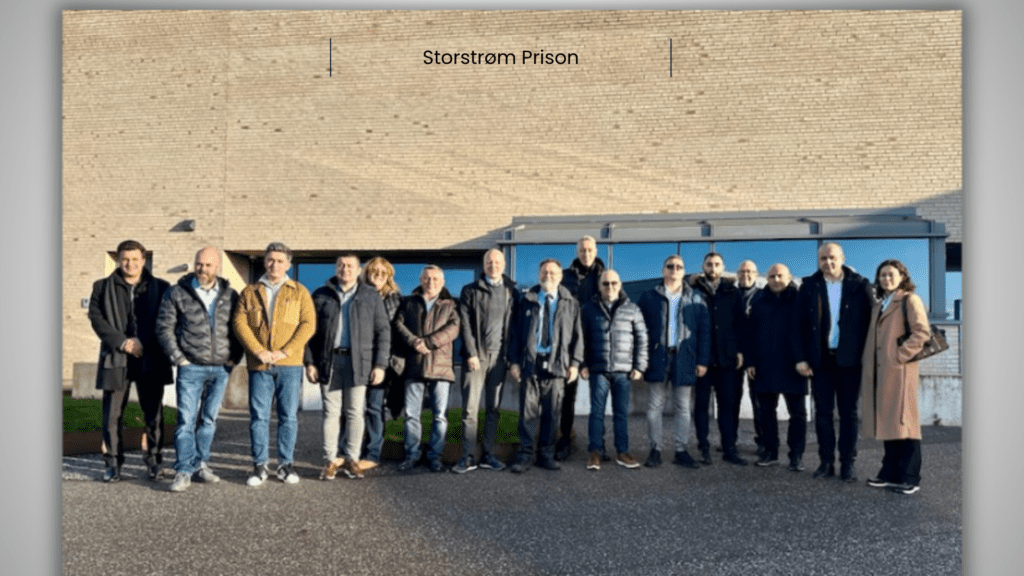
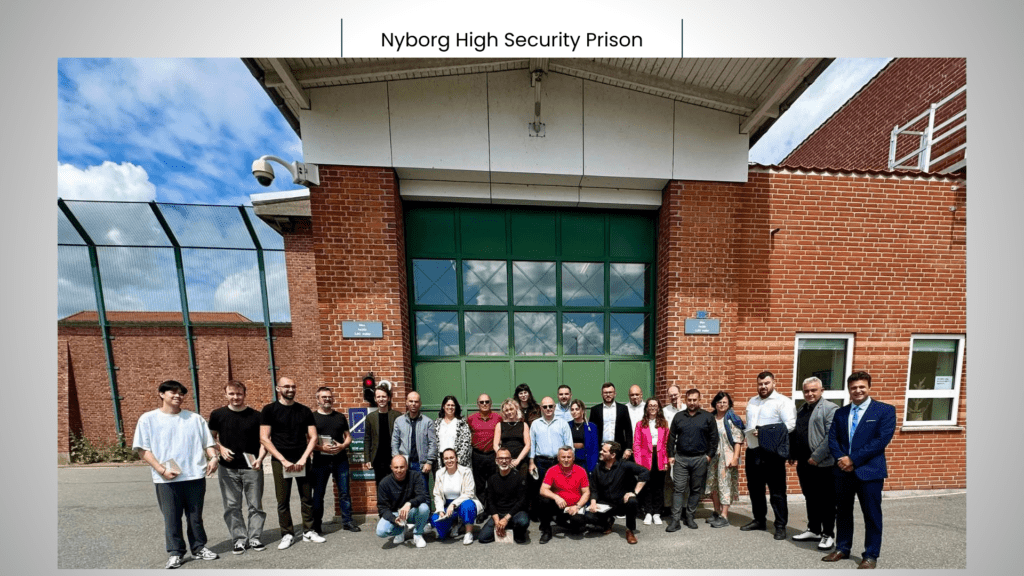
M4Pris also achieved outstanding dissemination and sustainability results. The project created a strong visual identity, developed an official website, published 4 newsletters, organised national multiplier events plus one extra event in Bulgaria, and held a high-level final conference in the High Security Prison in Nyborg, Denmark. The project attracted interest from North Macedonia, Moldova, and Turkey, and BrainLog’s presentation at the Erasmus+ M-PAVE networking seminar led to two new associated partners joining from BrainLog’s professional network: Richtungswechsel (Austria) and Promimpresa (Italy).
An additional achievement we are especially proud of is the publication of an article on M4Pris in ICPA’s Beyond the Wall Journal, Issue #10 – “Breaking Barriers: Inside Peer Support Programs.” BrainLog established the connection with ICPA and coordinated the publication opportunity. At the same time, KU Leuven authored the article’s content, helping to disseminate the project’s framework, methodology, and evaluation outcomes to an international audience of correctional professionals and researchers, reaching 10,000+ members.
This final evaluation is therefore not only a score. It is recognition of a project that successfully combined research, innovation, partnership, and practical implementation in a field where staff support is urgently needed. It is recognition of a consortium that transformed an important idea into concrete tools, tested them in real environments, and built a foundation for future European cooperation and long-term institutional change.
As coordinator, BrainLog is deeply grateful to all partners, associated partners, prison staff, mentors, mentees, coordinators, and stakeholders who contributed to this journey. We are proud of what M4Pris has achieved, and proud to see that this work has now been recognized with such a strong and positive final result.
#M4Pris #ErasmusPlus #ProjectSuccess #EuropeanProjects #BrainLog #PeerMentoring #PrisonStaff #CorrectionalStaff #VocationalEducation #VET #MentalHealth #WellbeingAtWork #StaffDevelopment #ProfessionalDevelopment #InnovationInEducation #InternationalCooperation #EUProjects #ProjectImpact #CapacityBuilding #Mentoring #TrainingAndDevelopment #InclusiveEducation #EuropeanPartnership #EducationInnovation #WorkplaceWellbeing #Resilience #Teamwork #ProjectAchievement #Dissemination #SustainableImpact